
In Indiana, if a road hazard causes a motorcycle accident, liability may fall on a government entity, a private contractor, or even an adjacent property owner.
The key is proving they knew, or should have known, about the dangerous condition and failed to fix it in a reasonable time. These cases present unique challenges because government bodies have certain legal protections, and their defense typically argues that you, the rider, share some of the blame for the crash. This argument reduces or even prevents you from recovering money for your injuries and losses.
However, a clear process exists for holding the responsible parties accountable. Pursuing the compensation needed to cover medical bills, lost income, and other damages starts with a thorough investigation to establish who was responsible for maintaining that specific stretch of road
If you have a question about a motorcycle accident caused by a dangerous road condition, call Yosha Law at (317) 648-7319.
Key Takeaways for Motorcycle Accidents Caused by Road Hazards in Indiana
- Liability depends on who controlled the road. Government agencies, contractors, or nearby property owners may be responsible if they failed to address a known hazard in time.
- Claims against government entities have strict deadlines. You may have as little as 180 days to file a formal notice, even though the lawsuit deadline is two years.
- Comparative fault can reduce or block compensation. If you’re found 51% or more at fault, you get nothing.
Who Is Legally Responsible for the Road Hazard That Caused Your Crash?
 After a crash caused by a pothole, loose gravel, or unmarked hazard, it’s not always obvious who is responsible for the road’s condition. The responsibility could lie with the city, the state, a private company, or a combination of entities. This uncertainty is frustrating, especially when you are trying to recover from your injuries.
Each type of entity operates under different rules, deadlines, and legal hurdles. For instance, claims against government bodies in Indiana have very short notice periods that, if missed, permanently bar you from recovery.
Identifying the correct party is a foundational step, and from there, the work of building a case begins. We investigate to identify the responsible party, which typically falls into one of these categories:
- Government Entities (State, County, or City)
- The Indiana Department of Transportation (INDOT) is generally responsible for state highways and interstates.
- County highway departments manage county roads.
- City or municipal street departments are responsible for roads within their boundaries, a common place for accidents in areas like Indianapolis.
- The Legal Hurdle: Proving the government had notice of the hazard is a requirement. We must show they either knew about the specific defect (actual notice) or that it existed for so long that they should have known about it through reasonable diligence (constructive notice).
- Private Contractors
- Construction companies working on roads have a duty to keep the area safe for all motorists. This includes providing clear warnings about uneven pavement, loose materials, sudden lane shifts, or unmarked drop-offs.
- Their failure to post adequate signage or secure a work zone makes them liable. For example, if loose gravel from a paving project is not properly swept and causes a motorcycle to lose traction, the construction company may be at fault.
- Private Property Owners
- In some situations, a business or homeowner may be responsible for a road hazard. This could happen if a commercial driver spills debris on the road and fails to clean it up, or if a property owner’s unmaintained trees obstruct a stop sign, leading to a collision.
How Do We Prove the Road Hazard Caused the Accident?
Simply hitting a pothole or a patch of loose gravel is not enough to establish a legal claim. We have to build a case that directly connects the specific road hazard to your motorcycle crash and the injuries you sustained. The connection must be clear and supported by evidence.
The defense, whether it’s a government entity or a private company, will look for any other potential cause for the accident. They will examine your speed, your actions leading up to the crash, and even the weather conditions. Our job is to systematically rule out those other factors and focus on the one element that was out of your control: the unsafe road.
A solid case is built on compelling and objective evidence. We focus on gathering specific proof that tells the story of what happened, leaving little room for doubt. This includes:
- Documenting the Hazard: Time is of the essence. We work to get clear photographs and precise measurements of the pothole, debris, or other hazard before it is repaired, removed, or changed by weather.
- Accident Reconstruction: In complex cases, we may consult with engineering professionals. These individuals use physics and forensic evidence to create a model of the accident, showing how the specific road condition would foreseeably cause a motorcycle of your type to lose control under those circumstances.
- Maintenance Records: We file formal requests for maintenance logs and inspection schedules from the responsible government entity or contractor. These documents are revealing, showing if the hazard had been previously reported by other citizens or if scheduled inspections were missed, which helps establish notice.
- Witness Statements: We work to locate and interview anyone who saw the accident. Perhaps even more importantly, we seek out people who live or work nearby who testify about how long the dangerous road condition existed, strengthening the argument for constructive notice.
Our firm handles this intensive evidence-gathering process. This allows you to step back from the stress of building a case and dedicate your energy to your physical and emotional recovery.
What Is Indiana’s “Modified Comparative Fault” Rule and How Will It Affect My Case?
You may hear the other side argue that you were partially at fault for the accident. This is a common defense strategy, and it is a direct reference to Indiana’s modified comparative fault law (IC 34-51-2).
In Indiana, you may still recover damages even if you are found to be partially responsible for the accident, as long as your share of the blame is 50% or less. The law recognizes that sometimes an accident isn’t entirely one person’s fault.
The 51% Bar
The most significant part of this rule is the cutoff. If you are found to be 51% or more at fault, you are barred from recovering any damages at all. This makes the allocation of fault a central issue in any road hazard case.
The responsible party’s insurance company will conduct its own investigation with the goal of finding any evidence that you were at fault. They will frequently make arguments such as:
- You were traveling too fast for the conditions.
- You were not paying adequate attention to the road ahead of you.
- You were not wearing a helmet, which they will argue worsened your head injuries (even though helmets are only required for riders under 18 in Indiana).
Our role is to build a case that anticipates and counters these arguments with strong evidence. We work to ensure that no amount of blame is unfairly placed on you, protecting your right to pursue the maximum compensation available under the law.
What Are the Biggest Challenges in a Road Hazard Claim?
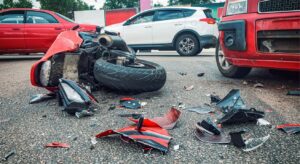 Claims against government entities face special legal defenses that are not present in a typical car accident case. These hurdles are in place to protect taxpayer money, but they also make it incredibly difficult for an injured person to get fair compensation.
One of the most significant defenses is “sovereign immunity,” a legal concept that shields government bodies from lawsuits. Another is the short deadline to provide formal notice of your road hazard claim in motorcycle accident. In many cases involving a city or county in Indiana, this deadline is as short as 180 days from the date of the accident. Missing this deadline ends your case before it even has a chance to begin.
Our approach is designed to meet these challenges head-on:
- Tort Claims Notice: The first and most time-sensitive step is filing a formal “Notice of Tort Claim.” We ensure this document is filed correctly, contains all the necessary information, and is sent to the proper government body within the strict deadline, preserving your right to sue.
- Overcoming Immunity: We work to prove that your case falls under an exception to governmental immunity. For example, immunity may not apply if the government knew of a dangerous condition but failed to address it in a reasonable timeframe.
- Proving Negligence: As mentioned before, the burden of proof is high. We focus on establishing the core elements of a negligence claim: that the defendant had a duty of care to maintain the road in a reasonably safe condition, that they breached that duty, and that this breach directly caused your injuries and damages.
Frequently Asked Questions About Motorcycle Accidents and Road Hazards in Indiana
Does it matter that I wasn’t wearing a helmet?
In Indiana, only riders and passengers under the age of 18 are required by Indiana motorcycle law to wear a helmet. However, even if you are over 18, the defense may still argue that your choice not to wear one contributed to the severity of your injuries, particularly if you suffered a head injury. This is an attempt to increase your percentage of fault under the comparative fault rule. We work to keep the focus on the cause of the crash itself—the road hazard that should not have been there.
What if the hazard was temporary, like gravel from a truck?
If the hazard was temporary debris, liability may fall on the trucking company or the driver if they are identified. This requires an immediate investigation to find the source of the debris before evidence disappears. This involves tracking down witnesses who saw the vehicle, checking for surveillance footage from nearby businesses, or identifying the company responsible for the material.
I crashed at an intersection in Indianapolis. Does that change my case?
It might. Intersections are where a high percentage of urban motorcycle crashes occur in Indiana, due to a combination of factors. If your crash at an intersection was caused by a road hazard like a deep pothole, poor road design, or an obstructed view from overgrown foliage, it adds another layer to the investigation. We investigate the intersection’s history for prior accidents or complaints, which helps establish that the municipality was aware of a dangerous condition.
How long do I have to file a lawsuit for a motorcycle accident in Indiana?
The general statute of limitations for a personal injury claim in Indiana is two years from the date of the accident. However, if a government entity is involved, you have a much shorter deadline—as little as 180 days for a city or county and 270 days for the state—to file a formal notice of your claim. This notice is a prerequisite to filing a lawsuit. Missing this early deadline prevents you from ever being able to file your lawsuit, regardless of the two-year statute of limitations.
 Holding the Right Parties Accountable with Yosha Law
You do not have to accept the blame for a situation you did not create, nor should you have to pay for someone else’s failure to maintain a safe road.
We handle the investigation, the strict legal deadlines, and the communications with insurance companies and government attorneys. This allows you to focus on what matters most: your health and your family. As experienced motorcycle accident lawyers, We are familiar with the roads, the courts, and the challenges people here in Indiana face after a serious crash.
The sooner we begin documenting the hazard and gathering evidence, the stronger your case will be.
To discuss your situation and understand your options, call Yosha Law for a free consultation at (317) 648-7319.