Indiana law gives you the right to seek payment for injuries caused by someone else’s negligence, but knowing your rights and successfully securing your future are two very different things.
Recovering fair payment for a brain injury requires a detailed understanding of both medicine and law. The road ahead might seem uncertain, filled with doctor’s appointments, insurance forms, and the stress of mounting bills.
As brain injury lawyers, we’re here to help make that road clearer.
We understand that you need to focus on healing, not on a legal battle. If you have questions about what to do next, we are here to listen. Call us anytime for a free, no-obligation conversation at (317) 648-7319.
Why Choose Yosha Law for Your Brain Injury Case?
 When you are facing a life-altering injury, you need a law firm with a proven history of standing up for its clients. At Yosha Law, your story is our focus. We are committed to helping you recover from the emotional, financial, and physical damage of a brain injury.
Our approach is built on:
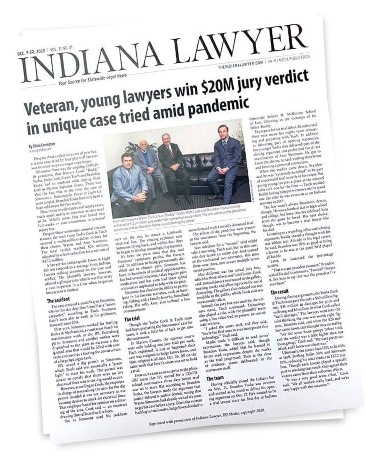
- An Unmatched Record of Trial Experience: We have secured more jury verdicts than any other law firm in Indiana’s history. Insurance companies recognize that we prepare every case for trial from day one. This readiness frequently leads to more significant settlement offers because they know we are prepared to go to court.
- Transparent and Honest Guidance: We give you a straightforward evaluation of your case without making misleading statements about the outcome. Our priority is to provide the information you need to make empowered decisions.
- Unwavering Client Commitment: We are your allies, available 24/7. Like family, you can call us anytime. We stand with you, beside you, and for you.
- Results That Rebuild Lives: We have recovered hundreds of millions of dollars for our clients, but our real focus is on the thousands of lives we have helped put back together.
- No Fee Unless We Win: We handle brain injury cases on a contingency fee basis. This means you pay nothing unless and until we recover payment for you.
Visit our Indianapolis office at 280 E 96th St Suite 220A. Let’s start the conversation about how we can help.
What Is a Traumatic Brain Injury?
A traumatic brain injury (TBI) is a disruption in the brain’s normal function caused by a bump, blow, jolt, or penetrating injury to the head. Unlike a broken arm, the symptoms of a TBI are not always obvious and can range from seemingly mild to completely life-altering.
What are the Different Types of Brain Injuries?
Our firm handles cases across the full spectrum of brain injuries, including:
- Concussions: Often called a “mild TBI“, a concussion is a serious injury that can leave lasting effects on concentration, memory, and mood.
- Contusions: This is a bruise on the brain tissue, which may result from a direct impact. The swelling sometimes requires surgery to relieve pressure inside the skull.
- Diffuse Axonal Injury (DAI): Common in car crashes, this injury happens when the brain rapidly shifts inside the skull, causing widespread tearing of nerve fibers called axons.
- Penetrating Injuries: These occur when an object breaks the skull and enters brain tissue, such as in a severe accident or from a gunshot.
- Anoxic/Hypoxic Brain Injury: This results from a lack of oxygen to the brain, which can happen during a birth injury, surgical error, or near-drowning incident.
What Are the Unseen Ways a Brain Injury Can Affect Your Life?
The damage from a brain injury goes far beyond what can be seen on an imaging scan. While you may be focused on physical pain, a TBI can quietly affect your personality, relationships, and ability to think clearly. These hidden symptoms are just as real as any physical wound and deserve compensation.
You might experience:
- Cognitive Difficulties: This includes memory loss, trouble concentrating, and difficulty organizing your thoughts. You might find yourself struggling with tasks that were once easy at work or at home.
- Emotional Changes: It is common to experience mood swings, irritability, anxiety, or depression after a TBI. Your personality might seem different to those who know you best.
- Sensory Issues: You could become sensitive to light and sound, or experience persistent ringing in your ears (tinnitus). Some people also report changes in their sense of taste or smell.
- Sleep Disturbances: Insomnia or sleeping much more than usual are frequent complaints. Fatigue is a persistent problem for many brain injury survivors, making it hard to get through the day.
Documenting them in a daily journal is one of the most helpful steps you can take. Your notes create a record of how the injury impacts your day-to-day life, which helps explain the full extent of your losses.
Where Do Most Brain Injuries Happen in Indianapolis?
 In one recent year, Indiana recorded over 23,000 traumatic brain injuries that led to emergency room visits, hospital stays, or death. While these injuries can occur anywhere, certain incidents and locations in Indianapolis and Marion County carry a higher risk.
What Are the Most Common Causes of TBIs in Indiana?
- Falls: Unintentional falls are the leading cause of TBI-related hospitalizations in the state. This includes everything from slip and falls on poorly maintained property to falls from heights on construction sites.
- Motor Vehicle Accidents: Car, truck, and motorcycle crashes are a primary cause of severe TBIs. Marion County consistently reports the highest number of collisions in the state, with 36,489 incidents in another recent year.
- Struck-By Incidents & Assaults: Being hit by an object or being the victim of a violent act are also significant causes of brain injuries.
Which Intersections in Indianapolis Are Most Dangerous?
Heavy traffic and complex road designs make some intersections magnets for accidents that cause head injuries. Drivers should use extra caution at:
- Rockville Road & Country Club Road
- 96th Street & Keystone Avenue
- 86th Street & Keystone Avenue/Keystone Crossing
- Fall Creek Parkway & Keystone Avenue
- 38th Street & Guion Road / High School Road
- Washington Street & Post Road
- Allisonville Road between 82nd and 86th Streets
What Compensation Can Be Recovered for a Brain Injury in Indiana?
A brain injury can reshape your life, and the financial toll can be steep. Medical bills for diagnostics, surgery, rehabilitation, and ongoing care can quickly pile up, all while the inability to work cuts off your income.
A personal injury claim is designed to provide the financial stability needed to cover every loss the injury caused. We pursue the maximum payment available to cover all damages, which are generally grouped into three types:
- Economic Damages: These are the tangible financial losses that can be calculated. This includes all past and future medical bills, lost wages from being unable to work, and the costs of rehabilitation services like cognitive and occupational therapy.
- Non-Economic Damages: These are intended to account for the personal, non-financial losses that affect your quality of life. This includes payment for physical pain, emotional distress, and the loss of ability to enjoy hobbies and activities as you once did.
- Punitive Damages: In rare situations where the at-fault party’s actions were grossly negligent or intentionally malicious, Indiana law allows for punitive damages. These are not meant to pay the victim for losses but to punish the wrongdoer and discourage others from similar conduct.
How does Indiana’s Comparative Fault Rule affect a claim?
Indiana uses a “modified comparative fault” rule. Simply put, this means you can recover damages as long as you are not found to be 51% or more at fault for the accident.
Your final payment is just reduced by your percentage of fault. Our role is to build a strong case that ensures no blame is unfairly placed on you.
How Does a Lawyer Prove a Brain Injury Claim?
The process involves several deliberate steps:
- A Thorough Investigation: We start by gathering all available evidence. This includes police reports, witness statements, photographs of the scene, and any available video footage. Our goal is to establish a clear picture of how the other party was at fault.
- Working with Medical Experts: We collaborate with your doctors, neurologists, and other specialists to fully document your diagnosis and treatment plan. To demonstrate the long-term impact, we may also consult with life care planners who can project the future medical needs and costs associated with your injury.
- Calculating the Full Financial Impact: A brain injury affects more than just your health; it affects your ability to earn a living. We work with economists and vocational experts to calculate your lost income and diminished earning capacity for the future.
- Building the Demand Package: Once we have assembled all the evidence, we create a comprehensive demand package. This document is presented to the insurance company, laying out our case and the full amount of payment we are seeking.
Most cases are settled through negotiation. However, if the insurance company refuses to make a fair offer, we are always prepared to take your case to trial.
How Should I Deal with the Insurance Company?
 After an accident, you will almost certainly have to communicate with an insurance company. Remember, they are a business, and that means they have to balance paying claims with managing their bottom line.
What Should I Expect During the Claims Process?
- A Request for a Recorded Statement: The at-fault party’s adjuster will likely ask you to give a recorded statement. You have no obligation to do so. These conversations are structured to find information that could be used to argue you were partly at fault or that your injuries are not as severe as you claim.
- A Quick Settlement Offer: An insurer might present an early settlement offer before the full extent of your brain injury is even known. This might be tempting as bills accumulate, but accepting it closes your claim permanently, even if your medical condition gets worse.
- A Slow and Frustrating Process: The claims process is often long and filled with paperwork. Insurance companies conduct a methodical investigation, searching for any evidence to argue you were at fault. It is easy to become frustrated by the delays and accept a lower offer just to be done with it.
We take over all communications with insurance companies for you. If they will not offer a fair settlement, we do not hesitate to take your case to court.
Indianapolis Brain Injury Lawyer FAQ
What if I already accepted a small settlement from the insurance company?
Once you sign a settlement agreement, you typically cannot reopen the claim, even if your condition worsens. If you have not signed anything yet, do not agree to further communication or payments until a personal injury lawyer reviews the offer.
How do doctors prove that a brain injury exists if imaging looks normal?
Not all brain injuries appear on CT or MRI scans. Doctors rely on neuropsychological testing, cognitive assessments, and detailed medical evaluations to document functional impairment. These records are powerful evidence in showing real, lasting damage.
Who can be held responsible for my brain injury?
It depends on how the injury happened. Responsible parties may include negligent drivers, property owners, employers, medical providers, or product manufacturers. Multiple defendants are common in serious brain injury cases, especially when unsafe conditions or defective products played a role.
What if I had a prior concussion or medical condition?
You can still recover damages. Indiana law allows recovery even when a prior condition made you more vulnerable, which is known as the “eggshell skull” rule. The at-fault party must take you as you are, and they are still responsible for the full extent of the new harm they caused.
Your Future Should Not Be Defined by This Injury
 Taking the first step toward reclaiming your future is easier than you think. Let us handle the legal process so you can dedicate your energy to healing.
Call us now for a free, confidential evaluation of your case at (317) 648-7319.