A motorcycle accident attorney working in Indianapolis fights a different battle than a typical car accident lawyer, because insurance adjusters walk into these claims already assuming the rider was reckless. Yosha Law built its entire motorcycle practice around pushing back on that assumption with evidence, not just argument, and taking the fight to trial when an insurer won’t budge.
What an Indianapolis Motorcycle Accident Law Firm Does Differently
Most personal injury firms handle a motorcycle case the same way they’d handle a fender-bender between two sedans, and that’s a mistake. Motorcycle claims involve their own injury patterns, their own insurance company playbook for shifting blame onto the rider, and their own set of Indiana laws around helmets and lane position that adjusters love to bring up the moment a claim gets filed.
Call (317) 334-9200 for a free, obligation-free consultation.
The Injuries That Make Motorcycle Cases Different
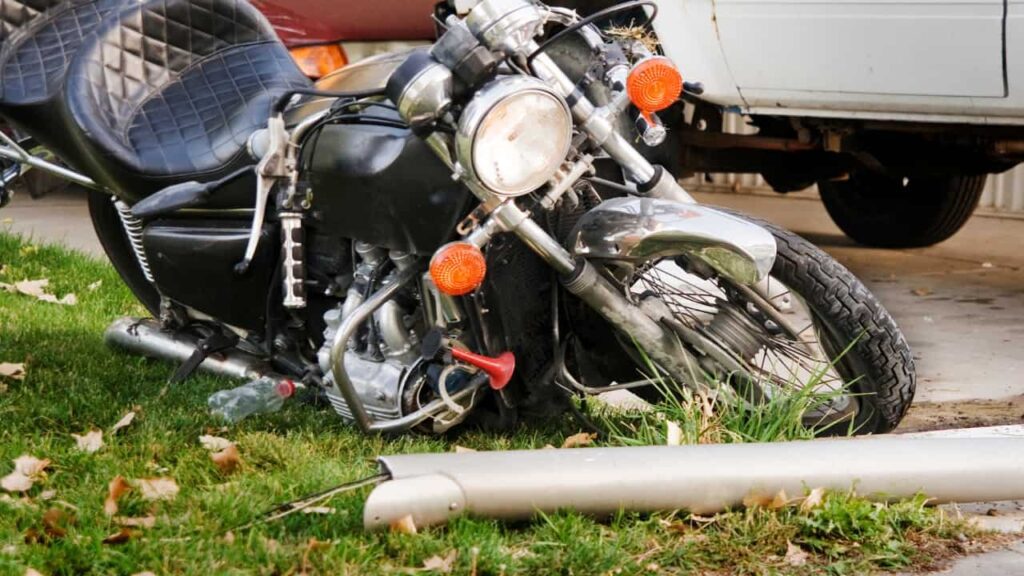
A motorcycle offers no frame, no airbags, and no seatbelt between a rider and the pavement, which shows up directly in the kinds of injury claims these cases involve. Road rash, traumatic brain injury, and lower leg or ankle fractures appear far more often in motorcycle cases than in an ordinary car accident claim, even when a rider was wearing a helmet and riding safely.
Brachial plexus injuries, sometimes called biker’s arm, and spinal cord injuries carry some of the highest long-term costs of any motorcycle crash injury, since the resulting impairment often means a lifetime of ongoing care and home modifications.
These injury patterns change how a case gets valued, since they carry long recovery timelines and a high likelihood of permanent impairment that a typical car accident settlement calculator doesn’t capture well.
Does Indiana Require Motorcycle Riders to Wear a Helmet?
Only riders under 18 and anyone riding on a learner’s permit are required to wear a helmet under Indiana Code 9-19-7-1. Riders 18 and older with a full motorcycle endorsement can legally choose not to wear one, a policy that traces back to a 1977 repeal of Indiana’s universal helmet law.
That legal freedom doesn’t stop insurance adjusters from bringing up helmet use anyway. Even when a rider wasn’t legally required to wear one, an adjuster may still argue that going without a helmet contributed to the severity of the injury, an argument aimed at reducing what the claim is worth under Indiana’s comparative fault rules. Knowing how to counter that argument, rather than letting it quietly shrink a settlement offer, is part of what separates a motorcycle-specific case strategy from a generic one.
Is Lane Splitting Legal in Indianapolis?
No. Lane splitting, riding between two lanes of traffic moving in the same direction, is prohibited under Indiana Code 9-21-10-6. Motorcycles in Indiana are entitled to full use of a traffic lane, the same as any car or truck, and other drivers are legally required to respect that space rather than crowding a rider out of it.
This is one of the most common questions we hear from riders after a crash, since even experienced riders assume the rule works differently than it does. Even though lane splitting itself is illegal here, that doesn’t mean every crash involving a motorcycle near stopped traffic was the rider’s fault. Insurance companies sometimes raise the lane-splitting question even in cases where the rider was doing nothing wrong, simply because it’s an easy way to introduce doubt.
Talk to a Motorcycle Accident Attorney
Why Insurance Companies Are Biased Against Motorcyclists
Adjusters and even jurors can carry an unconscious assumption that motorcyclists are more reckless than other drivers, and that bias can shape how a claim gets valued from the very first call. A claim that would be a straightforward liability case between two cars often gets met with more resistance, more scrutiny of the rider’s speed and lane position, and lower initial offers when a motorcycle is involved, even when the facts clearly point to the other driver.
Countering that bias takes more than pointing to a police report. It takes accident reconstruction, a clear account of the other driver’s actions, such as a left turn made without checking for oncoming traffic, and a case built to withstand the assumption that the rider must have done something wrong simply because they were on two wheels instead of four.
Common Causes of Motorcycle Accidents in Indianapolis
Left-turn crashes are the single most common way a motorcyclist gets seriously hurt in city traffic, happening when a driver turning left across an intersection fails to see an oncoming motorcycle or misjudges its speed. Lane-change crashes follow a similar pattern, since a motorcycle’s narrow profile makes it easy to miss in a side mirror or blind spot, particularly on a busy stretch like I-465 or Keystone Avenue.
Road hazards hit motorcyclists harder than car occupants, since a pothole, a patch of gravel, or a stretch of uneven pavement that a car barely notices can throw a motorcycle off balance entirely. Indianapolis winters add another layer of risk, since salt residue and freeze-thaw potholes tend to appear on the same roads riders use to get back on their bikes as soon as the weather turns. Rush hour on the North Split and along Keystone Avenue brings the added risk of sudden braking and abrupt lane shifts, conditions that leave little room for error on two wheels.
If any of these situations caused your crash, call (317) 334-9200 to talk through what happened.
What Compensation Can You Recover After a Motorcycle Accident?
Economic damages cover medical bills, future treatment, lost wages, and reduced earning capacity if the injury changes what kind of work you can do going forward. Given how often motorcycle injuries involve permanent impairment or traumatic brain injury, the future medical care component of a claim often ends up being the largest single piece of the total value.
Non-economic damages account for pain and suffering, the loss of activities you used to enjoy, and the emotional toll of a long recovery. In cases involving a driver who was distracted, drunk, or otherwise reckless, punitive damages, extra compensation meant to punish the at-fault party rather than cover a specific loss, may also apply, adding another layer to what a case can ultimately recover beyond the base economic and non-economic totals.
How Does Indiana’s Comparative Fault Law Apply to Motorcycle Claims?
Indiana follows a modified comparative fault rule under Indiana Code 34-51-2-6. You can still recover compensation as long as your share of fault is 50% or less, though your total gets reduced by that percentage, and recovery is barred entirely if you’re found 51% or more at fault.
This is exactly where motorcycle bias tends to surface most directly. An insurer may try to argue that a rider’s speed, lane position, or lack of a helmet contributed to the crash or its severity, even in cases where the other driver’s negligence was the clear primary cause. Pushing back on an inflated fault percentage often makes the difference between a fair settlement and one quietly reduced by an argument that shouldn’t have applied in the first place.
Recent Motorcycle Accident Results From Our Team
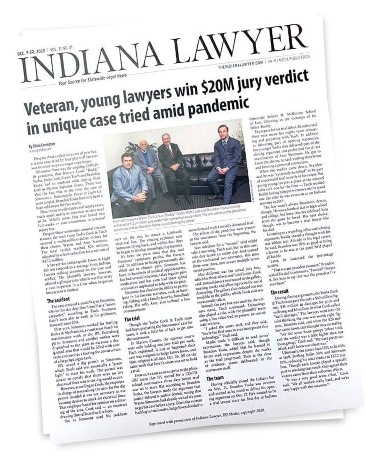
Brandon Yosha has built a track record of turning early insurance offers that undervalued a case into results that reflect what it was actually worth. In one case, an insurer offered nothing before trial, and the case ended in a $6.2 million settlement once the full picture of the injury came out. In another, a $300,000 offer grew into a $7.5 million verdict after the firm took the case in front of a jury instead of accepting the number on the table.
Across the firm’s history, this pattern holds in more than 100 verdicts that beat what the insurance company offered before trial, a track record that carries particular weight in motorcycle cases where insurers often start with a lower number simply because a bike, not a car, was involved.
How Long Do You Have to File a Motorcycle Accident Claim in Indiana?
In most cases, Indiana Code 34-11-2-4 gives you two years from the date of the crash to file a lawsuit. That deadline applies whether the case eventually settles or goes to trial, and Indiana courts rarely grant exceptions once it passes.
Waiting doesn’t just risk the legal deadline. Road debris gets cleared, skid marks fade, and witnesses’ memories aren’t as sharp months after a crash as they are the week it happened. Reaching out to a motorcycle accident attorney soon after the crash protects both the evidence and the filing deadline at the same time.

FAQs: Indianapolis Motorcycle Accident Lawyer
Here are answers to some of the questions we hear most from riders and their families after a crash in Indianapolis.
What if the crash was caused by a pothole or road defect the city failed to fix?
Claims involving a government-maintained road follow a much shorter notice deadline than the standard two-year window, as little as 180 days under Indiana Code 34-13-3-8. These cases require quick action to preserve maintenance records and document the hazard before a road crew repairs it.
Does my own motorcycle insurance help if the at-fault driver has no coverage?
Uninsured and underinsured motorist coverage, required on most Indiana policies unless rejected in writing, can step in when the at-fault driver’s insurance falls short. Riders often carry this coverage without realizing how much it matters until they actually need to use it.
What if the other driver claims they simply didn’t see me?
A driver’s failure to notice a motorcycle isn’t a defense, since drivers have a legal duty to watch for and yield to all traffic, including motorcycles. This excuse is common in left-turn and lane-change crashes and rarely holds up once the full evidence is reviewed.
Is a motorcycle accident claim handled differently than a car accident claim?
Yes, both in the injuries involved and in how insurance companies approach liability and fault. A firm that treats a motorcycle case exactly like a car accident case often misses the specific bias and evidence issues unique to riders.
Can a passenger on my motorcycle file their own injury claim?
Yes, a passenger injured in the crash has an independent right to pursue compensation, separate from any claim the rider brings. This applies whether the at-fault party was another driver or, in rare cases, the motorcycle operator themselves.
What if I was riding a borrowed or rented motorcycle at the time of the crash?
You can generally still pursue a claim against the at-fault driver regardless of who owns the motorcycle you were riding. Depending on the circumstances, the motorcycle owner’s insurance may also come into play alongside your own coverage.
Call Yosha Law About Your Indianapolis Motorcycle Accident
Motorcycle cases carry a bias problem that ordinary car accident cases simply don’t face, and that bias can shrink a settlement offer before you’ve even had a chance to push back. Yosha Law has spent more than 60 years building cases that account for that bias and taking insurance companies to trial when they won’t offer a fair number. Call (317) 334-9200 any hour of the day for a free case review, and let’s talk about what happened.