What happens if the driver who hit you flees the scene? Yes, you can still recover compensation after a hit-and-run in Indiana, usually through your own uninsured motorist coverage. A hit and run attorney at Yosha Law can help you file that claim promptly, work directly with police to try to identify the driver who fled, and pursue every source of compensation available even if that driver is never found.
Founded in 1963 by Buddy Yosha and now led by his son Brandon Yosha, our firm has spent decades handling catastrophic injury cases across Indianapolis, including hit-and-run crashes where the injured person assumed, wrongly, that a fleeing driver meant no recovery was possible. If a driver hit you and left the scene anywhere in Indianapolis, call (317) 334-9200 for a case review any hour of the day.
Get a Free Consultation With an Indianapolis Car Accident Lawyer from Yosha Law
To get your free consultation with an Indianapolis car accident lawyer, reach out to us online or call 317-334-9200. We are available 24/7 to take your call, and we are ready to help you move forward after a wreck.

Why a Hit-and-Run Case Needs a Different Playbook
A hit-and-run isn’t just an ordinary car accident with an extra complication. It’s a case where the person responsible for your injuries has already removed themselves entirely from the equation, which means the claim has to be built around your own insurance policy, police investigation, and evidence preservation instead of a straightforward negotiation with the other driver’s insurer.
Call (317) 334-9200 for a free, obligation-free consultation.
What to Do Immediately After a Hit-and-Run in Indianapolis
Safety comes first. Pull out of traffic if you can, turn on your hazard lights, and check yourself and any passengers for injuries before doing anything else. Do not chase the fleeing driver, since that puts you in more danger and can complicate your legal position later.
Try to note anything you possibly can about the vehicle that fled: color, make, model, direction of travel, and even a partial license plate number if you catch one. Even a few characters of a plate number, combined with a general description of the vehicle, can be enough for police to narrow down a search significantly.
Call 911 immediately so a police report gets filed through the Indiana State Police crash reporting system, and look around for anyone who witnessed the crash, since an independent witness account can matter enormously if your case later depends on corroborating evidence rather than the other driver’s own statement. Take photos of the scene, your vehicle’s damage, and anything nearby that might have captured the crash on video, such as a business storefront camera or a traffic signal box mounted at the intersection.
What Happens to Drivers Who Leave the Scene in Indiana?
Indiana law requires every driver involved in a crash to stop, exchange information, and render aid under Indiana Code 9-26-1-1.1. A driver who flees commits a crime, with penalties that scale based on what happened: a Class B misdemeanor if the crash only caused property damage, a Class A misdemeanor if someone was injured, and a Level 4 or Level 3 felony if the crash resulted in death, catastrophic injury, or involved an intoxicated driver.
Criminal charges against the driver, if they’re ever identified, run on a separate track from your civil claim for compensation. A conviction can support your case, but you don’t have to wait for police to catch the driver, or for any criminal case to resolve, before pursuing compensation through your own insurance coverage.
Get a Free Consultation With an Indianapolis Car Accident Lawyer from Yosha Law
To get your free consultation with an Indianapolis car accident lawyer, reach out to us online or call 317-334-9200. We are available 24/7 to take your call, and we are ready to help you move forward after a wreck.

How Uninsured Motorist Coverage Applies to a Hit-and-Run
Indiana treats an unidentified hit-and-run driver as an uninsured motorist for insurance purposes, which means your own uninsured motorist coverage, required on most policies under Indiana Code 27-7-5-2 unless rejected in writing, can step in to pay for your injuries. This is the single most important piece of a hit-and-run claim, since it’s often the only realistic path to compensation when the at-fault driver is never found.
Indiana generally requires physical contact between the fleeing vehicle and your car for a UM claim to apply cleanly, though cases involving a driver who forced you off the road without direct contact aren’t automatically excluded if you have strong corroborating evidence. A police report, a witness account, dashcam or nearby surveillance footage, or physical evidence like paint transfer on your vehicle can all help establish what happened even without the other driver’s cooperation.
Underinsured motorist coverage also works alongside UM coverage in a related situation: when the fleeing driver is eventually identified but carries too little insurance to cover your full damages. Knowing which coverage applies, and how the two interact if the driver eventually turns up later in the process, is part of building a claim that accounts for every dollar of coverage actually available on your policy.
How a Lawyer Works to Identify the Driver Who Fled
Even when police haven’t identified the driver, a hit-and-run case isn’t automatically a dead end. Traffic camera footage, business surveillance video, and doorbell camera recordings near the crash site can sometimes capture the fleeing vehicle, but that footage often gets deleted within days, which is why acting quickly matters as much here as the injury itself. Reaching out to police and nearby businesses within the first 24 to 72 hours meaningfully improves the odds that useful footage still exists.
Paint transfer analysis, debris left at the scene, and body shop alerts for vehicles matching the description can all help narrow down who was driving. Social media searches sometimes turn up a driver who posted about damage to their car around the same time as the crash. None of this always leads to an identification, but a case built around gathering this evidence quickly gives you a real shot at recovering more than your UM policy limits if the driver is eventually found and carries their own liability coverage.
Talk to a Hit-and-Run Attorney

What Compensation Can You Recover When the Driver Is Never Found?
Your uninsured motorist coverage can pay for medical expenses, lost wages, and pain and suffering up to your policy limits, the same categories of damages you’d pursue against an identified at-fault driver. The amount available depends entirely on how much UM coverage you carry, which is why higher UM limits matter more for hit-and-run risk than most drivers realize when they’re choosing a policy, often years before a crash they never expected happens.
If your injuries exceed your UM policy limits, other avenues may still be available depending on the details of the crash, including claims against a property owner if poor lighting or a hazard contributed, or against a third party if their negligence played a role even though the fleeing driver was primarily at fault. A full case review looks at every possible source of recovery, not just the UM claim alone, since stacking multiple coverage sources is often the only way to cover a truly catastrophic injury.
Does Indiana’s Comparative Fault Law Apply to Hit-and-Run Claims?
Yes. Indiana’s modified comparative fault rule under Indiana Code 34-51-2-6 still applies even when you’re pursuing your own UM coverage instead of the other driver’s insurance. You can recover as long as your own fault is 50% or less, with your total reduced by that percentage, and barred entirely if you’re found 51% or more responsible.
Insurance companies sometimes push back harder on UM claims than they do on ordinary third-party claims, since they’re paying out of their own policy rather than shifting the cost to another insurer. Expect closer scrutiny of your account of the crash, which is exactly why the evidence you gather in the hours and days after a hit-and-run carries so much weight later.
Recent Results From Our Team
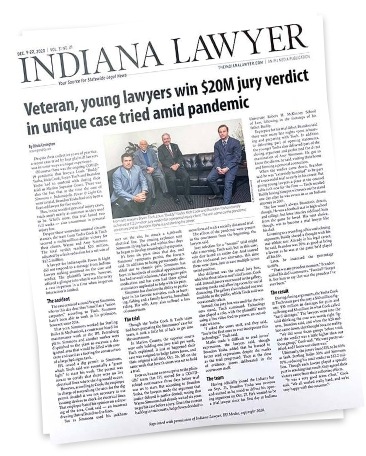
Yosha Law has built a track record of turning weak insurance positions into results that reflect what a case is actually worth, including hit-and-run and UM claims where insurers initially argued coverage didn’t apply.
Across the firm’s history, this pattern holds in more than 100 verdicts that beat what the insurance company offered before trial, a track record that matters just as much in a UM dispute as it does in a case against an identified driver’s insurer.
How Long Do You Have to File a Hit-and-Run Claim in Indiana?
In most cases, Indiana Code 34-11-2-4 gives you two years from the date of the crash to file a lawsuit, and UM claims are typically governed by the terms of your own insurance policy alongside that deadline. Some policies require notice of a hit-and-run claim within a shorter window than the statute of limitations itself, the legal deadline for filing suit, sometimes as little as 30 days, so checking your specific policy language early matters more here than in a typical car accident claim.
Evidence disappears faster than either deadline. Surveillance footage gets overwritten, debris gets cleared from the roadway, and witnesses become harder to locate the longer you wait. Reaching out to a hit-and-run attorney quickly protects both the legal deadlines and the evidence your case depends on, before either one closes the door on a full recovery.
Get a Free Consultation With an Indianapolis Car Accident Lawyer from Yosha Law
To get your free consultation with an Indianapolis car accident lawyer, reach out to us online or call 317-334-9200. We are available 24/7 to take your call, and we are ready to help you move forward after a wreck.
FAQs: Indianapolis Hit and Run Accident Lawyer
Here are answers to some of the questions we hear most from people dealing with a hit-and-run in Indianapolis.
Do I have to report a hit-and-run to police before I can file a UM claim?
Yes, filing a police report is typically required by your insurance policy and strengthens your claim considerably. Report the crash as soon as possible, ideally within 24 hours, since delayed reporting can give an insurer grounds to question the claim.
What if the driver who hit me is later identified after I’ve already used my UM coverage?
You may be able to pursue additional compensation directly from that driver if their liability coverage or personal assets exceed what your UM policy already paid. Your insurer may also have a right to be reimbursed from any recovery against the identified driver, which a lawyer can help sort out.
Does it matter if the hit-and-run happened in a parking lot instead of on the road?
No, Indiana’s duty to stop and exchange information applies to any accident, including one in a parking lot, and UM coverage generally applies the same way. Parking lot hit-and-runs often have better odds of surveillance footage from nearby businesses, which can help identify the driver.
Can I still get compensation if I was a pedestrian or cyclist hit by a driver who fled?
Yes, uninsured motorist coverage typically extends to pedestrians and cyclists struck by a hit-and-run driver, not just people inside a vehicle. The same evidence-gathering steps apply, and acting quickly matters just as much in these cases.
What if my own insurance company denies my hit-and-run claim?
A denial isn’t the final word, and insurers sometimes deny hit-and-run claims based on insufficient corroborating evidence that a lawyer can help strengthen or appeal. Reviewing the specific denial reason often reveals whether the insurer applied your policy correctly.
Should I still hire a lawyer if my damage was minor and no one was hurt?
For minor property damage with no injury, many people handle a hit-and-run claim through their own insurer without legal help. It’s worth a free consultation regardless, particularly if the insurer is disputing the claim or your policy’s physical damage coverage.
Call Yosha Law About Your Indianapolis Hit-and-Run Accident
A driver who flees the scene doesn’t get to erase your right to compensation, even when they’re never identified. Yosha Law has spent more than 60 years building cases around the evidence and insurance coverage available, rather than treating a hit-and-run as a dead end simply because no one has a name yet. Call (317) 334-9200 any hour of the day for a free case review, and let’s find out what your case is really worth.