If you were injured in a car accident in Indianapolis — whether on I-465, the I-65/I-70 North Split, Keystone Avenue, or a neighborhood street in Broad Ripple — Indiana law gives you the right to pursue compensation from the driver who caused the crash. But protecting that right is not automatic. From the moment the accident happens, insurance companies begin building their defense.
Insurers move quickly. Adjusters investigate, review police reports, analyze medical records, and look for ways to argue that you were partially at fault under Indiana’s 51% modified comparative fault rule. Even a small shift in blame can dramatically reduce what they have to pay — or eliminate your recovery entirely. You deserve a legal team that moves just as fast to protect you.
For decades, Yosha Law has represented injury victims throughout Indianapolis and Marion County. We know how cases are handled in the Marion County courts, how local insurers evaluate claims, and how to build a case that fully reflects your medical costs, lost income, pain, and long-term impact. We begin preserving evidence immediately so your side of the story is documented clearly and forcefully.
The sooner you involve an attorney, the stronger your position becomes. Call (317) 648-7319 now for a free, confidential, no-obligation consultation. We’re available 24/7 and you pay nothing unless we win.
Indianapolis Car Accident Guide
- Key Takeaways for Indianapolis Car Accident Claims
- Why Choose Yosha Law for Your Indianapolis Car Accident Claim?
- What Compensation Can You Pursue After a Car Accident?
- How Does Indiana’s Comparative Fault Rule Work?
- Common Injuries Reported in Indianapolis Car Accidents
- Where Do Most Accidents Happen in Indianapolis?
- What is the Process for a Car Accident Claim in Indiana?
- What If the At-Fault Driver Was Uninsured?
- What if a Loved One Died in the Accident?
- Frequently Asked Questions About Indianapolis Car Accident Claims
- Your Path to Recovery Starts Here
Key Takeaways for Indianapolis Car Accident Claims
- Indiana’s laws on fault directly impacts your compensation. The state uses a “modified comparative fault” rule, which means you can lose the right to recover any money if you are found to be 51% or more at fault for the crash.
- Strict deadlines apply to your claim. You generally have two years from the date of the accident to file a lawsuit, a deadline known as the statute of limitations. For claims involving a government entity, the deadline can be as short as 180 days.
- What you do at home affects your case. Consistently following your doctor’s treatment plan, tracking your expenses, and avoiding social media posts are practical steps that help document the reality of your injuries and losses.
Why Choose Yosha Law for Your Indianapolis Car Accident Claim?
 A Track Record of Winning Big for Indiana Injury Victims
Yosha Law has earned a reputation as one of the most successful personal injury law firms in Indiana. Our firm has secured more jury verdicts than any other personal injury firm in the state. We prepare every case for trial from the start, which often leads to larger settlement offers from insurance companies that want to avoid court.
Deep Local Roots and Over 60 Years of Experience
Founded in 1963, Yosha Law has represented injured people in Indianapolis and across Indiana for more than six decades. Our personal injury attorneys know how to present a compelling case under Indiana’s personal injury laws, and we are familiar with the local court system, judges, and insurance adjusters. When you hire Yosha Law, you’re getting legal advice from a team that knows what works—because we’ve done it, hundreds of times.
Recognized Legal Leaders in Personal Injury Law
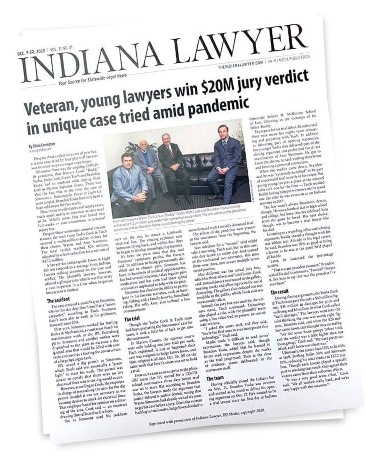
The firm’s founder, Louis “Buddy” Yosha, helped shape personal injury law in Indiana. His legacy continues with Brandon Yosha, who has been featured in Forbes and named a Super Lawyers Rising Star. In one of the state’s largest verdicts, the firm secured $20 million for a client injured by a negligent utility company.
Personal, Responsive Support Day or Night
You’re not just another case number at Yosha Law. Their team is available 24/7 to answer your questions, explain your legal options, and walk you through the car accident claims process. Every client receives clear communication, honest advice, and legal support tailored to their situation.
No Upfront Fees & You Only Pay If We Win
Yosha Law works on a contingency fee basis, which means you pay nothing unless they recover compensation for you. From your free consultation to the final resolution of your claim, there are no hidden fees or surprise costs. Their goal is to maximize your compensation while minimizing your stress.
Visit Yosha Law’s Indianapolis Office
Their office is conveniently located at 9102 N. Meridian Street, Suite 535 near Broad Ripple Village.
What Compensation Can You Pursue After a Car Accident?
 Our goal is to pursue the maximum compensation available under the law, ensuring that the story of your suffering is fully accounted for.
Economic Damages: The Tangible Costs
These are the direct, calculable expenses that piled up because of the crash. We work to make sure every single cost is documented and included.
- Medical Bills: This covers everything from the initial emergency room visit and ambulance ride to future surgeries, physical therapy, and any ongoing care you might need.
- Lost Wages: This is the income you lost because you were physically unable to work during your recovery.
- Loss of Earning Capacity: If the injuries permanently affect your ability to do your job or earn the same level of income as before, this compensates for that future loss.
- Property Damage: This includes the cost to repair or replace your vehicle and any other personal items that were damaged in the collision.
Non-Economic Damages: The Human Toll
These damages are for the non-financial ways the accident has rewritten your life. They may be harder to put a number on, but they are just as real.
- Pain and Suffering: For the physical pain and emotional distress your injuries have caused after a car accident.
- Loss of Enjoyment of Life: If you can no longer participate in hobbies, family activities, or daily routines that you once loved.
- Emotional Anguish: For the fear, anxiety, depression, and trauma that linger long after the crash itself.
How Does Indiana’s Comparative Fault Rule Work?
In Indiana, your ability to recover money after a car accident doesn’t just depend on whether another driver was negligent. It also depends on how much fault the fact-finder (a jury or judge) assigns to you compared with the other parties involved. Indiana follows a modified comparative fault system under state law, which has a critical cutoff point that can determine whether you recover anything at all.
Under this rule:
-
You can recover compensation as long as your share of fault is 50% or less of the total fault attributed in the crash.
-
If your percentage of fault is 51% or more, you are barred from recovering any damages — even if the other driver caused most of the accident. This is often called Indiana’s “51% bar rule.”
Once fault is determined, any compensation you might receive is reduced by your percentage of responsibility. Example:
Imagine your total damages (medical bills, lost wages, pain and suffering, etc.) come to $100,000, and the fact-finder decides:
-
The other driver was 70% at fault, and
-
You were 30% at fault.
Under Indiana’s rule, your recovery would be reduced to $70,000 (100,000 × (1 – 0.30)). But if the fact-finder found you were 51% or more at fault, you would be unable to recover anything at all, even if the other driver clearly did something wrong.
This rule matters because insurance adjusters will look for any evidence to argue you share responsibility — such as failing to signal, speeding, or not braking sooner — in an effort to reduce or eliminate the amount they have to pay.
Because of this, having an experienced car accident attorney on your side early can help make sure fault is allocated fairly, evidence is preserved, and weak arguments that unfairly assign blame to you are challenged aggressively.
Common Injuries Reported in Indianapolis Car Accidents
The forces involved in a vehicle collision can cause a wide range of injuries, some of which may not show symptoms for days or even weeks.
- Whiplash and Soft Tissue Injuries: This is a common injury, especially in rear-end collisions, caused by the rapid back-and-forth movement of the neck. Symptoms include neck pain and stiffness, headaches, and dizziness.
- Traumatic Brain Injuries (TBI): A blow to the head can cause anything from a mild concussion to a severe TBI, with symptoms like confusion, memory problems, and loss of consciousness. Even “mild” TBIs may have long-lasting effects.
- Back and Spinal Cord Injuries: The impact of a crash can lead to herniated discs or, in the most severe cases, damage to the spinal cord, which could result in paralysis.
- Fractures and Broken Bones: The force of a collision frequently breaks bones in the arms, legs, ribs, and pelvis. These injuries are painful and may require surgery and extensive rehabilitation.
- Internal Injuries: Damage to internal organs is a serious risk in high-impact crashes and requires immediate medical attention.
Where Do Most Accidents Happen in Indianapolis?
Car crashes can occur anywhere, but recent data shows that certain roads, corridors, and intersections in Indianapolis and Marion County experience far higher rates of collisions, serious injuries, and fatalities than others, a critical consideration if you’re pursuing a personal injury claim. In 2022, Marion County recorded 36,489 total collisions, more than any other county in Indiana, and also accounted for a large portion of the state’s traffic fatalities.
In addition, a fatal crash review team observed that overall vehicle accidents in Marion County have grown substantially in recent years, rising from under 10,000 in 2019 to more than 36,000 recently.
High-Crash Roads & Corridors in Indianapolis
Some streets and freeway segments repeatedly show up in crash data and safety studies:
-
38th Street & Keystone Avenue: A major east-west arterial with high traffic volumes and a history of collisions.
-
Meridian Street & 38th Street: Another busy junction in a dense commercial area with elevated crash frequency.
-
21st Street & Post Road: A high-conflict intersection with multiple turning movements and frequent traffic.
-
County Line Road & Emerson Avenue: A county border corridor with notable crash density in city traffic studies.
-
I-465 / I-65 and I-465 / I-70 Interchanges: High-speed weaving and congestion in these freeway interchanges contribute to frequent sideswipe and rear-end collisions.
These areas are part of the Indianapolis High Injury Network, which highlights corridors with the greatest concentration of serious and fatal crashes.
Common Causes of Crashes in Indianapolis
Crashes in these high-risk locations often stem from predictable factors that also play a role in injury claims:
-
Distracted Driving: Despite a statewide hands-free law, distracted driving remains a major hazard, part of broader trends showing that distracted and speeding drivers contribute to thousands of crashes each year across Indiana.
-
Speeding & Aggressive Driving: High speeds, tailgating, and reckless lane changes increase both the likelihood and severity of collisions in busy traffic corridors.
-
Failure to Yield & Intersection Risks: Intersections in urban settings like Indianapolis see a disproportionate share of serious crashes because of complex traffic patterns and turning conflicts.
-
Pedestrians & Cyclists: Vulnerable road users — especially pedestrians — account for a rising share of serious injuries and deaths on city streets, with advocacy groups reporting hundreds of pedestrian and cyclist incidents in recent years.
-
Weather & Road Conditions: Rain, snow, and ice can create slick conditions that make even familiar roads dangerous, particularly on high-speed interstates and ramps.
Understanding where and how crashes are most likely to occur in Indianapolis helps accident victims and their attorneys reconstruct events, show patterns of negligence, and pursue full compensation for injuries, medical costs, and other losses.
What is the Process for a Car Accident Claim in Indiana?
After an accident, you will most likely have to interact with an insurance adjuster. It helps to understand their role and the process you’re about to enter.
Keep These Points in Mind:
- They May Ask for a Recorded Statement: The other driver’s insurance adjuster might ask you to provide a recorded statement detailing what happened. You are not legally obligated to provide one. These statements are often used to find inconsistencies or admissions that could be used to assign you partial fault. It is always best to consult with an attorney before agreeing to a recorded statement.
- An Early Settlement Offer Might Be Too Low: It’s not uncommon for an insurance company to make a quick settlement offer, sometimes before you even know the full extent of your injuries. While getting money quickly as medical bills are piling up might seem appealing, accepting an early offer closes your claim for good. You give up the right to seek more compensation if your injuries require more treatment than you initially expected.
- The Claims Process Takes Its Time: Filing an insurance claim involves a great deal of paperwork and documentation. The process is methodical and can feel slow, especially when you are anxious about your finances. This frustration can lead some people to accept a lower offer just to get it over with. Our team handles all communications and paperwork with the insurance companies, allowing you to focus on getting better.
What If the At-Fault Driver Was Uninsured?
It’s a frustrating scenario: the driver who caused the crash doesn’t have insurance, or not enough to cover your bills. This is where your own insurance policy can help, specifically through Uninsured/Underinsured Motorist (UM/UIM) coverage.
In Indiana, insurance companies are required to offer you this coverage, and you must reject it in writing if you don’t want it. If you have it, your own insurance company steps in to cover the losses that the at-fault driver’s policy should have paid for. This includes medical bills, lost wages, and pain and suffering, up to the limits of your UM/UIM policy.
What if a Loved One Died in the Accident?
If a car accident results in a fatality, the family of the person who died may be able to file a wrongful death claim. This type of legal action seeks to hold the negligent party accountable and recover damages for the losses the family has suffered.
Under Indiana’s wrongful death statutes, a personal representative of the deceased’s estate must file the claim. The family may be able to seek compensation for:
- Medical, hospital, funeral, and burial expenses.
- Lost earnings the deceased would have provided.
- Loss of love and companionship.
Like personal injury claims, wrongful death lawsuits in Indiana generally must be filed within two years of the date of death.
What To Do After a Car Accident in Indianapolis, Indiana
What you do immediately after a crash can directly impact your ability to recover compensation under Indiana law. Evidence disappears quickly, memories fade, and insurance companies begin investigating almost immediately.
If your accident happened on busy corridors like I-465, I-65, Keystone Avenue, or near high-traffic intersections in Marion County, taking the right steps right away is critical.
1. Call 911 and Report the Accident
Always report the crash to law enforcement — especially in Indianapolis where police reports often play a key role in determining fault.
-
The responding officer will document the scene
-
A police report will be generated for insurance and legal purposes
-
Injuries and property damage will be officially recorded
If the crash occurred in an area involving a government vehicle (city bus, IndyGo, state vehicle), documentation becomes even more important because shorter notice deadlines may apply.
2. Seek Immediate Medical Attention
Even if you feel “okay” after the accident, you should still get evaluated by a medical professional.
Many crash injuries — including whiplash, traumatic brain injuries, and internal injuries — may not show symptoms right away.
Medical records are critical because:
-
They connect your injuries directly to the crash
-
They document the severity of harm
-
They establish damages for your claim
Delaying treatment can give insurance companies an argument that your injuries are unrelated or not serious.
3. Document the Scene and Preserve Evidence
If you are physically able:
-
Take photos of vehicle damage
-
Photograph skid marks, traffic signals, road conditions, and intersection layout
-
Capture license plates and vehicle positions
-
Collect contact information from witnesses
In Indianapolis, traffic cameras, business surveillance footage, and nearby dashcams may also capture valuable evidence — but footage is often overwritten quickly. Acting fast matters.
4. Avoid Giving Recorded Statements to Insurance Adjusters
After the crash, the at-fault driver’s insurance company may contact you and request a recorded statement.
You are not required to provide one.
Insurance adjusters often use recorded statements to:
-
Identify inconsistencies
-
Shift partial blame onto you under Indiana’s 51% comparative fault rule
-
Reduce the value of your claim
Before speaking with any insurer, consider consulting an experienced Indianapolis car accident attorney.
5. Notify Your Own Insurance Company
Report the accident to your insurer, especially if:
-
The other driver is uninsured or underinsured
-
You carry MedPay or uninsured motorist coverage
If the at-fault driver does not have adequate insurance, your own policy may provide protection.
6. Contact an Indianapolis Car Accident Lawyer Early
The sooner legal counsel becomes involved, the stronger your case becomes.
An attorney can:
-
Investigate the crash scene
-
Obtain surveillance footage
-
Analyze police reports
-
Assess fault under Indiana law
-
Handle communications with insurance companies
At Yosha Law, we begin protecting evidence immediately and prepare every case as if it will go to trial.
If you were injured anywhere in Marion County — whether near downtown, on the interstates, or in surrounding neighborhoods — we’re here to help you understand your rights.
Call (317) 648-7319 for a free, confidential consultation.
Frequently Asked Questions About Indianapolis Car Accident Claims
How long do I have to file a car accident lawsuit in Indiana?
In most cases, Indiana gives you two years from the date of the accident to file a personal injury lawsuit. This deadline is called the statute of limitations. If you miss it, you likely lose your right to seek compensation. If the claim involves a government entity — such as an IndyGo bus or city vehicle — you may need to file formal notice within as little as 180 days.
How much is my Indianapolis car accident case worth?
The value depends on your injuries, medical bills, lost wages, pain and suffering, fault percentage, and available insurance coverage. Every case is different. Insurance companies often undervalue claims early, so a full review of your damages is important before accepting any settlement.
What happens if I was partially at fault in Indianapolis?
Indiana follows a modified comparative fault rule. You can recover compensation if you are 50% or less at fault, but your award is reduced by your percentage of fault. If you are 51% or more at fault, you recover nothing. Insurers often try to shift blame to reduce payouts.
Should I talk to the other driver’s insurance company?
You are not required to give a recorded statement. Insurance adjusters may use your statements to reduce or deny your claim. It is usually safer to speak with an attorney before communicating with the other driver’s insurer.
What is MedPay and should I use it?
MedPay is optional coverage that pays your medical bills after an accident regardless of fault. It can cover emergency care and related expenses quickly. It often does not require reimbursement from your final settlement, making it useful for immediate costs.
How long does a car accident settlement take in Indiana?
Timelines vary based on injury severity, liability disputes, and whether litigation is needed. Some cases settle in months, while others take a year or longer. Serious or disputed claims typically take more time to resolve.
Do I have to go to court to recover compensation?
Most cases settle without trial. However, strong trial preparation increases leverage during negotiations. If a fair settlement cannot be reached, your attorney should be ready to present your case in court.
Do I need a lawyer for a minor car accident in Indianapolis?
Even minor crashes can lead to hidden injuries or disputed claims. An attorney can review your case for free and help protect you from undervaluation or fault disputes that may arise later.
What if the accident involved a city vehicle or an IndyGo bus?
Special notice rules apply when a government vehicle is involved. You may need to file notice within 180 days. These claims have strict deadlines, so legal guidance early in the process is important.
Your Path to Recovery Starts Here
 You did not choose for this to happen, but you choose how you move forward. You do not have to face the legal process and insurance companies alone. At Yosha Law, we are here to provide guidance and clarity. The sooner we begin investigating your case, the better we can protect your rights.
Contact us today for a free, confidential case review at (317) 648-7319.
Get a Free Consultation With an Indianapolis Car Accident Lawyer from Yosha Law
To get your free consultation with an Indianapolis car accident lawyer, reach out to us online or call 317-334-9200. We are available 24/7 to take your call, and we are ready to help you move forward after a wreck.