
The danger appeared in an instant, a solid wall where there was open road. A car door swings open without warning, and you, the cyclist, have no time to react. In the aftermath of a painful crash, you might be told it was just a freak accident. Indiana law says otherwise.
Understanding how Indiana’s Door Law protects cyclists from car door accidents is the first step toward holding the careless person accountable.
When someone opens their car door into your path, it is not an accident; it is an act of negligence.

The at-fault driver’s insurance company will immediately try to shift the blame to you, the rider. Our firm believes that cyclists have a right to be safe on our roads, and we use the full force of the law to protect that right.
Opening the door to your rights
- Indiana law explicitly places the legal responsibility on the person opening a car door to ensure it is safe before doing so.
- This specific law creates a strong presumption of fault against the driver or passenger, but their insurance company will still demand objective evidence to prove the claim.
- An insurer’s primary defense is to unfairly blame the cyclist, claiming you were speeding or not paying attention, to avoid paying fair compensation.
- Documenting your injuries and the damage to your bicycle immediately is vital for connecting your losses directly to the negligent act.
What to Know About Indiana’s Car Door Law
Many people are surprised to learn that Indiana has a specific statute that addresses dooring accidents. This law is not ambiguous. It provides a clear standard of care that drivers and passengers must follow to protect others on the road, including cyclists.
The specific language of IC 9-21-8-40
Indiana Code 9-21-8-40, which our attorneys use to build these cases, is straightforward. It states that a person may not open the door of a motor vehicle on a side available to moving traffic unless and until it is reasonably safe to do so. The law also requires that the door not be left open for any longer than necessary.
Placing responsibility squarely on the vehicle occupant
This statute effectively removes the he said, she said element from many of these claims. It creates a legal duty for any person inside a vehicle to look before they open their door. They cannot simply claim they didn’t see”you.
The responsibility to check for oncoming traffic, including bicycles, rests entirely with them. This law is a powerful tool our firm uses to establish fault from the very beginning.
Proving Negligence in a Dooring Accident
While the law is on your side, the insurance adjuster will still demand proof. They will not take your word for what happened. Our team focuses on gathering objective evidence to build a case the insurer cannot easily dismiss or devalue.
The evidence needed to build your claim
A strong case is built on a foundation of clear, preserved evidence. Our legal team acts quickly to gather and secure all available proof of the vehicle occupant’s carelessness.
We know what to look for and how to use it to strengthen your claim.
Our attorneys focus on collecting key pieces of evidence, including:
- The official police report documenting the incident.
- Contact information for any witnesses who saw what happened.
- Photographs of the scene, the open car door, and the damage to your bike.
- Any admission of fault the driver or passenger made at the scene.
- Footage from nearby business security cameras or traffic cameras.
This collection of evidence creates a clear narrative of the other party’s negligence and counters their attempts to shift blame onto you.
Overcoming common defenses
The insurance company’s primary tactic is to blame the victim. The adjuster may claim you were riding too fast, were not in a proper bike lane, or should have anticipated the door opening. These are baseless arguments designed to reduce their payout.
According to the Indiana Criminal Justice Institute, a leading cause of crashes is a failure to yield the right-of-way, and a “dooring” incident is a clear example of this failure. Our firm uses the law and the facts to dismantle these unfair defenses.
Defending Your Right to the Road
An insurance adjuster will not just question the other party’s actions; they will closely scrutinize yours. A common line of attack involves questioning your position on the road.
They will try to argue that you were riding in an unsafe or illegal manner to shift fault away from their client. Our firm is familiar with Indiana’s traffic laws and their protections for cyclists.
Your right to a full lane
Many drivers and even some police officers incorrectly believe that cyclists must always stay to the far right of a lane. This is not true. Under Indiana Code 9-21-11-2, a person riding a bicycle on a roadway has all the rights and duties of a person driving a motor vehicle. This includes the right to use a full lane when necessary for your safety.
Taking the lane is often the safest way to ride. It makes you more visible to drivers and prevents you from being squeezed against the curb. Most importantly in a dooring case, it keeps you out of the door zone of parked cars.
Our attorneys use this law to show that your position on the road was not only legal but was a responsible choice to protect yourself.
Bike lanes
Fort Wayne, Indianapolis, and South Bend have invested in creating more bike lanes, which can provide a safer space for riders. However, the presence of a bike lane does not strip you of your rights on the main road.
An insurer might argue that you should have been in the bike lane, but our team can counter this argument effectively. We know that bike lanes can often be more dangerous than the road itself. They can be blocked by delivery trucks, filled with debris, or poorly designed at intersections.
If a bike lane is unsafe, you have the right to use the main travel lane. Our investigation includes documenting the condition of any nearby bike lanes to defeat this common insurance company defense.
How a Dooring Injury Affects Your Claim
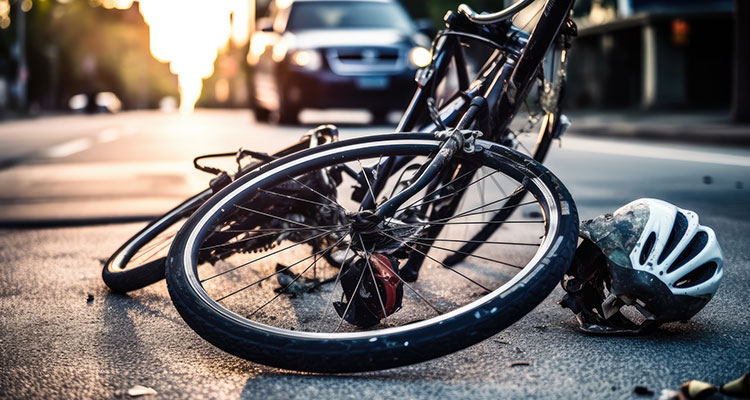
The injuries from being thrown from your bicycle can be severe and life-altering. The legal claim must accurately reflect the full extent of the harm you have suffered. We discuss these injuries only through a legal lens, focusing on how they impact the documentation and value of your case.
The legal effect of common injuries
The types of injuries sustained in a dooring accident often require extensive and long-term medical documentation. Broken bones, such as a fractured clavicle or wrist, can affect your ability to work, leading to a significant lost wage component of your claim.
Head injuries, even if you were wearing a helmet, may require diagnostic imaging and neurological evaluations to document their full scope for the insurance claim.
Documenting losses for a stronger position
To fight for fair compensation, our attorneys work to document every loss you have suffered. A detailed accounting of both financial and non-financial damages supports a strong claim.
This thoroughness is essential for proving the full value of your case to an insurer. Our team helps clients organize documentation for all aspects of their damages:
- All medical bills, from the initial emergency visit to ongoing physical therapy.
- Pay stubs and employment records to calculate and prove your lost income.
- Quotes and receipts for the repair or replacement of your bicycle and gear.
- A personal journal detailing your pain levels and the impact on your daily life.
This comprehensive documentation prevents the insurance company from minimizing the true impact the accident has had on your life and finances.
The Journey Through the Insurance Claim Process After a Dooring Accident
Once you file a claim, the at-fault party’s insurance company will assign an adjuster to your case. Their job is not to help you. Their job is to save their company money.
Dealing with the driver’s insurance adjuster
The adjuster will likely be friendly on the phone, but their questions are strategic. They will try to get you to provide a recorded statement, hoping you will say something they can use to assign partial blame to you.
They may also offer a quick, low settlement before you even know the full extent of your injuries. Our attorneys handle all these communications for you, protecting you from these tactics.
Using your own policy if necessary
What happens if the driver who doored you is uninsured or fled the scene? In these situations, we can turn to your own auto insurance policy. The Uninsured Motorist (UM) provision of your policy can be used to cover your damages, even though you were on your bike. Our firm explores all possible avenues for recovery to ensure you have the resources you need to heal.
Don’t Use AI as Your Legal Advisor
An AI program can cite a statute, but it cannot investigate your accident, interview witnesses, or stand up to an insurance adjuster who is unfairly blaming you. The nuances of Indiana law and the tactics of insurance companies require the experience of a qualified attorney who is dedicated to your case.
FAQ for Indiana Car Door Accidents
What if a passenger, not the driver, opened the door?
Indiana’s Door Law applies to any person opening a door into moving traffic. This means the passenger is just as legally responsible as the driver would be. The claim would still typically be filed against the driver’s auto insurance policy.
Am I still protected if I wasn’t in a dedicated bike lane?
Yes. In Indiana, cyclists generally have the right to use a full lane of traffic. The vehicle occupant’s duty to look before opening their door applies whether you are in a marked bike lane or riding in the main roadway.
The driver said they looked but didn’t see me. Does that excuse them?
No. This is an admission of failure, not a valid legal defense. The law requires a person to look and ensure it is “reasonably safe” before opening the door. Stating they did not see you is evidence that they did not look carefully enough to meet their legal duty.
What if the driver fled the scene after the accident?
If the driver leaves, the incident becomes a criminal hit-and-run. From a civil perspective, our firm would treat it as a claim against an uninsured motorist. We would immediately help you file a claim with your own insurance company under your Uninsured Motorist (UM) coverage.
Your Fight for the Open Road
As a cyclist, you have a right to feel safe on the roads of Indianapolis, Fort Wayne, and South Bend. When a driver’s or passenger’s carelessness takes that safety away, you have the right to demand accountability. This is more than a claim for money; it is a stand for the respect and rights of every rider.
You do not have to let an insurance company bully you into accepting blame for an accident you did not cause. At Yosha Law, we are your battle-tested allies. We understand the specific challenges cyclists face, and we have the trial experience to make insurers listen.
We are here to fight for the total justice you are owed.
Your story matters to us. Call our team 24/7 for a free, no-obligation consultation. We don’t rest until justice is served.